
Gym Recovery Equipment Australia: What Every Gym and Athlete Needs in 2026
6 MIN READ | GYM RECOVERY GUIDE
The workout builds the stimulus. Recovery is where the progress actually happens. That is why the best gyms in Australia now give recovery the same floor space they once gave to a second squat rack.
Members want it too. Many already own a massage gun at home and expect more from a premium membership. A dedicated recovery zone answers that, and it gives gyms a reason to charge more and keep members longer.
This guide covers the gym recovery equipment we rate most highly at MeWellness, who each piece suits, and how gyms can kit out a recovery zone at wholesale pricing.
FOR GYMS AND STUDIOS
Wholesale pricing on orders of more than 4 units.
Applies across Air Relax, Rapid Release, breathing trainers and air purifiers. Request a quote.
The Best Gym Recovery Equipment in Australia
Five categories cover almost every recovery need on a gym floor. Prices are current RRP inc. GST.
1. Compression Recovery Boots
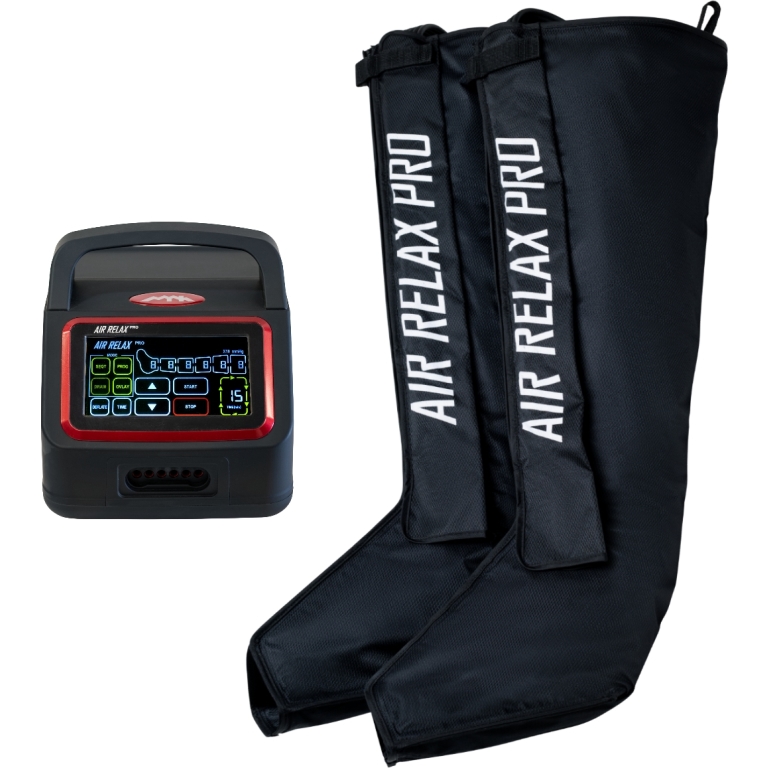
Air compression boots wrap the legs and inflate in sequence, from the feet up. Members use them after leg day, long runs or a HIIT class. They are the most requested recovery item in gyms and the easiest to run as a paid session.
- Air Relax PRO 4.0 Leg Recovery System, $2,099. Our pick for gyms: built for back-to-back sessions.
- Air Relax Plus 3.0 Leg Recovery System, $1,120. Great value for home gyms and smaller studios.
- Therabody JetBoots PRO Plus, $1,499. Cordless and portable for PTs on the move.
2. Vibration and Percussion Therapy
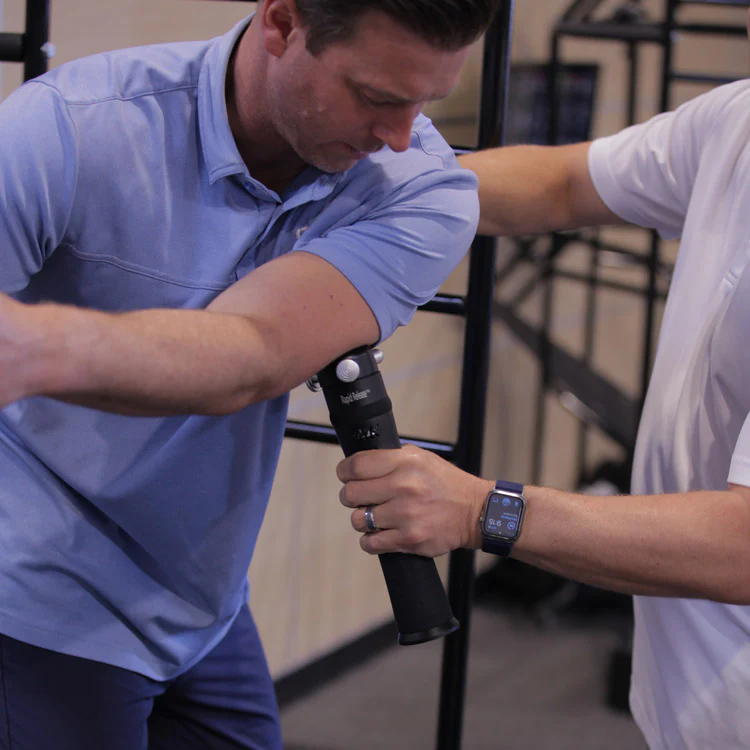
Handheld vibration therapy loosens tight spots before and after training. It is quick, so it suits warm-up areas and PT sessions.
- Rapid Release Pro3, $2,197.80. Professional-grade high-speed vibration for trainers and in-house physios.
- Rapid Release ProAm, $1,399. Full-body vibration therapy for gym floors and serious athletes.
- Rapid Release Traveler, $699. Compact and portable for gym bags.
- Theragun PRO Plus, $949, and Theragun Prime Plus, $699. The best-known massage guns, ideal for retail at the front desk.
3. Ice Baths and Cold Plunge
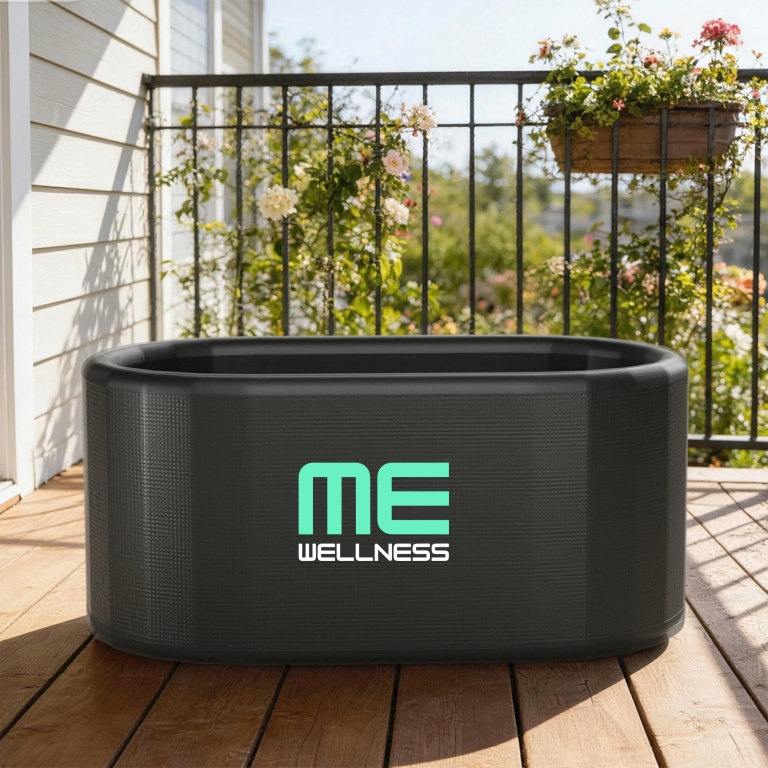
A chilled plunge is the centrepiece of most new recovery zones. A chiller keeps the water cold all day without bags of ice.
- 1HP Ice Bath Chiller + Oval Tub, $3,870. The 1HP chiller handles higher member traffic.
- 0.6HP Ice Bath Chiller + Round Tub, $3,200. Ideal for home gyms and boutique studios.
4. Breathing Muscle Trainers

Breathing is the most overlooked part of performance. Respiratory muscle trainers add resistance to each breath so the breathing muscles get stronger, like any other muscle. They suit endurance athletes, CrossFit, combat sports and HYROX training.
- POWERbreathe K5, $1,249. Digital, with session data, for coaches who track progress.
- POWERbreathe K3 Digital, $895. A strong mid-range digital option.
- Airofit Elite, $527. App-guided training members can use at home.
- POWERbreathe Plus, $123.20. Affordable entry point and an easy retail add-on.
See the full range of breathing muscle trainers.
5. Air Purifiers for Gyms

Gyms are busy, enclosed and full of heavy breathing. Dust, chalk, odours and bushfire smoke all build up. A HEPA air purifier keeps the training floor and recovery room fresher.
- Ionmax+ Aire X, $1,199. 1,000 m³/h CADR for spaces up to 260 m², the right size for a training floor.
- Ionmax Lavish Plus, $499. H13 HEPA and UV-C for rooms up to 138 m², ideal for recovery rooms and change rooms.
See all HEPA air purifiers.
For Gym Owners: Build a Recovery Zone That Pays for Itself
A recovery zone lifts membership value, keeps members coming back between sessions and opens a new revenue line. You do not need a full renovation. A corner, a few chairs and the right equipment is enough to start.
Three Ways to Make Recovery Profitable
- Premium tier. Include recovery access in a higher-priced membership.
- Pay per session. Charge for 20 to 30 minute compression or cold plunge sessions.
- Retail. Sell massage guns and breathing trainers at the front desk.
Starter Recovery Zone Kits
| Kit | Suits | What is in it |
|---|---|---|
| Starter | Boutique studios, PT studios | 2 x Air Relax PRO 4.0, 1 x Rapid Release ProAm, 1 x Ionmax Lavish Plus |
| Performance | 24/7 and commercial gyms | 4 x Air Relax PRO 4.0, 2 x Rapid Release Pro3, 1 x 1HP Ice Bath + Oval Tub, 1 x Ionmax+ Aire X |
| Endurance | CrossFit, HYROX and run clubs | 2 x Air Relax PRO 4.0, POWERbreathe K5 for coaches, POWERbreathe Plus for retail, 1 x Rapid Release ProAm |
Mix and match to suit your space. We are happy to build a custom quote.
Wholesale Pricing for Gyms
Order more than 4 units and you unlock wholesale pricing. That applies across our recovery range, including Air Relax compression boots, Rapid Release vibration therapy, breathing muscle trainers and air purifiers.
- Wholesale pricing on orders over 4 units
- Mix across product lines (confirm with our team)
- Australian stock and local support
- Ideal for gym groups, franchises, PT studios and sports clubs
For Athletes and Home Gyms: What to Buy First
Start with your training style and budget. Pick one tool you will use every week, then build from there.
| If you mainly… | Start with | From |
|---|---|---|
| Lift heavy or train legs often | Air Relax Plus 3.0 compression boots | $1,120 |
| Want quick relief before and after sessions | Rapid Release Traveler or Theragun Prime Plus | $699 |
| Run, cycle, row or do HYROX | POWERbreathe Plus breathing trainer | $123.20 |
| Want the full cold therapy routine at home | 0.6HP Ice Bath + Round Tub | $3,200 |
| Train in a garage or spare room | Ionmax Lavish Plus air purifier | $499 |
Frequently Asked Questions
What recovery equipment should a gym have?
Most gyms start with compression boots and a vibration therapy device. Add an ice bath and air purifier as the recovery zone grows.
Do recovery boots work?
Compression boots are widely used by athletes and teams to help legs feel fresher after hard sessions. Read our guide: Do Recovery Boots Work? Benefits and Science.
How much does a gym recovery zone cost?
Our Starter kit (2 compression boots, 1 vibration device, 1 air purifier) is about $6,100 at RRP. Orders over 4 units qualify for wholesale pricing, which brings that down.
Can gyms buy recovery equipment wholesale in Australia?
Yes. MeWellness offers wholesale pricing on orders of more than 4 units. Contact us for a quote.
Are breathing trainers useful for gym members?
Yes, especially for endurance, HIIT, CrossFit and combat sport athletes. They train the breathing muscles with resistance, much like weights train the legs.
Why put an air purifier in a gym?
A busy training floor builds up dust, chalk, odours and smoke. A HEPA purifier with activated carbon helps keep the air cleaner for members and staff.
Kit Out Your Gym or Your Home Setup
Whether you are an athlete chasing faster recovery or a gym owner building a recovery zone, MeWellness has you covered.
- Members and athletes: shop compression boots, vibration therapy and ice baths with fast Australia-wide shipping.
- Gyms, studios and clubs: order more than 4 units for wholesale pricing. Request a quote, email sales@mewellness.com.au or call 0470 645 648.
Products are intended for general wellness, comfort and support only. They are not intended to diagnose, treat, cure or prevent any medical condition.


POWERbreathe K5 Electronic Inspiratory Muscle Trainer - Digital Breathing Trainer for Athletes
POWERbreathe K5
Inspiratory Muscle Trainer
The most advanced device in the POWERbreathe range. Electronically tapered resistance, live biofeedback and full session analytics for athletes, coaches and clinics across Australia.

Breathing Training You Can Measure
Inspiratory muscle training strengthens the diaphragm the same way resistance training strengthens any muscle. The K5 turns every breath into data.
Live Biofeedback
Watch your breath curve in real time through Breathe-Link software on desktop or laptop while you train.
Tapered Resistance
Resistance adjusts electronically within each breath, matching your natural force curve for fuller training breaths.
Team & Clinic Ready
Up to 30 user profiles with 1,200 stored sessions each, plus 36 sessions stored on the device itself.
Provable Progress
Graphical performance trends make improvement easy to demonstrate to athletes, patients and coaches.
From First Breath to Measurable Gains
Assess
Follow the on-screen prompts to complete your baseline assessment. The K5 sets your starting resistance automatically.
Train
Short sessions once or twice daily. Electronically tapered resistance keeps every breath at the right load.
Connect
Link to Breathe-Link software for live biofeedback, custom programs and multi-user management.
Track
Review historical graphs to see inspiratory strength improve week on week, usually within the first month.
Five Metrics, Every Breath
Where mechanical trainers give you a dial setting, the K5 measures the physics of your breathing so you can periodise respiratory training like any other session in the program.
Built for Serious Breathing Training
Endurance Athletes
Runners, cyclists, swimmers, rowers and triathletes use IMT to delay breathing muscle fatigue and hold form deeper into races.
Coaches & Sports Scientists
Baseline every athlete, program their loading and track adaptation across a season with multi-user profiles and session data.
Serious Home Users
Outgrown a mechanical breathing trainer? The K5 is the step up when you want to see your numbers, not guess at them.
Physios & Clinics
Objective measurement, repeatable assessment and clear progress reporting for respiratory muscle training programs. MeWellness supplies clinics, gyms and allied health practices Australia-wide.
Ask about practitioner pricing →Why Go Electronic?
| Feature | POWERbreathe K5 | Mechanical IMT Trainer |
|---|---|---|
| Resistance type | Electronic, tapered within each breath | Fixed spring load |
| Live biofeedback | ✓ Via Breathe-Link software | ✗ |
| Performance metrics | ✓ Load, power, volume, flow, energy | ✗ Dial setting only |
| Session history | ✓ 36 on device, 1,200 per user via software | ✗ |
| Multi-user profiles | ✓ Up to 30 users | ✗ Single user hygiene limit |
| Best for | Elite sport, clinics, data-driven training | Entry-level home training |
Everything You Need
- POWERbreathe K5 electronic breathing trainer
- Australian plug and USB charging lead
- Charging cradle and storage pouch
- Mouthpiece and nose clip
- Cleansing tablets and user manual
- Breathe-Link software (free desktop download, not a mobile app)
Simple Upkeep
- Rinse the mouthpiece and valve head in warm water after each session
- Weekly cleansing tablet soak for the valve head, about 10 minutes
- Keep the electronic display unit dry at all times
- Do not train during a cold, sinus or chest infection
- Training should never hurt. If it does, stop and see your doctor
- Adult supervision recommended for users under 16
POWERbreathe K5 Questions, Answered
An inspiratory muscle trainer adds resistance to your inhalation, strengthening the diaphragm and intercostal muscles over time. Stronger breathing muscles fatigue later, improving exercise tolerance and reducing breathlessness during hard efforts.
Mechanical trainers use a fixed spring load. The K5 is fully electronic. It measures your breathing, tapers resistance through each breath and records every session, so you train at the right load and can prove your progress with data.
No. Breathe-Link software runs on a desktop or laptop, not a mobile app. The device also works standalone and stores up to 36 sessions internally, so you do not need a computer for everyday training.
Most users complete short sessions once or twice daily at the resistance recommended after the initial assessment. Improvements in inspiratory strength are typically measurable within a few weeks of consistent training.
Research into respiratory muscle training for asthma and sleep-disordered breathing is ongoing and promising, but the K5 is a training device, not a medical treatment. Speak with your doctor before using IMT to support management of a diagnosed condition.
Yes. MeWellness ships the POWERbreathe K5 from Sydney to every Australian state and territory, with express options available at checkout. Every order includes a GST invoice.
Stronger Breathing Starts Here
Join athletes, coaches and clinics across Australia training with the POWERbreathe K5. In stock in Sydney with fast Australia-wide shipping.
Add to Cart →
Vibration Plate for Osteoporosis
Vibration Plate Therapy for Osteoporosis: Does It Work?
More than 1.2 million Australians live with osteoporosis, and a further 6.3 million have low bone density (osteopenia), according to Healthy Bones Australia. For many, especially older adults or those recovering from injury, high-impact exercise isn't always safe or realistic — yet staying inactive only accelerates bone loss.
This is where low intensity vibration (LIV) therapy comes in. Delivered through a specialised vibration plate, it offers a gentle, low-impact way to stimulate bone and muscle — without the strain of traditional weight-bearing exercise.
What is a vibration plate, and how is it different for osteoporosis?
Not all vibration plates are created equal. The platforms you'll find at most gyms are designed for fitness and fat-burning — they produce strong, high-amplitude vibrations that can actually be counterproductive, or even risky, for someone with fragile bones.
Medical-grade vibration plates are a different category altogether. They use much gentler, precisely controlled oscillations designed specifically for people with reduced bone density, poor balance, or limited mobility. The underlying science was originally developed through research supported by NASA and the State University of New York, initially to help astronauts preserve bone density during extended time in microgravity.
One of the few TGA-listed devices in this category available in Australia is the Marodyne LiV vibration plate, which uses this exact low intensity vibration approach.
| Feature | Gym / fitness plate | Medical-grade LIV plate |
|---|---|---|
| Typical amplitude | High | Very low |
| Typical acceleration | 2g–6g | ~0.3g–0.4g |
| Primary goal | Muscle activation, fat burning | Bone metabolism, balance, fall-risk reduction |
| Suitable for osteoporosis? | Not recommended without clearance | Designed for this use case |
| Session length | 10–20 min, active movement | ~10 min, standing passively |
| Regulatory status | Consumer fitness product | TGA-listed medical device (ARTG) |
How does vibration therapy affect bone and muscle?
Bone is living tissue that responds to mechanical loading. When you walk, climb stairs, or carry weight, your skeleton reacts by activating osteoblasts (the cells that build new bone) while keeping osteoclasts (the cells that break bone down) in check. In osteoporosis, this balance shifts — bone is broken down faster than it's rebuilt.
Low intensity vibration is thought to help by stimulating micro-circulation in bone tissue, encouraging cell signalling, and activating small stabilising muscles that improve balance and coordination.
What is Low Intensity Vibration (LIV)?
LIV refers to vibration delivered at a very low amplitude — typically around 30 Hz frequency with acceleration capped at roughly 0.4g. That's substantially gentler than a typical fitness vibration plate, which is precisely why it's considered appropriate for people with fragile bones, balance issues, or limited mobility. Well-designed LIV devices also auto-calibrate to the user's body weight.
- Compliant daily users reporting improved balance/stability at 6 months — 62%
- Reporting no notable change — 38%
Illustrative summary based on typical outcomes reported across published LIV studies. Individual results vary — not a guarantee of outcome.
What does the research say?
Low intensity vibration is one of the more extensively studied forms of mechanical bone stimulation. A frequently cited study published in the Journal of Bone and Mineral Research (Rubin et al., 2004) followed postmenopausal women over a year and found that daily LIV use was associated with measurable improvements in bone density at the hip and spine compared with a placebo group.
Results across the broader body of research are mixed — vibration therapy tends to work best as one part of a broader bone-health strategy rather than a standalone fix.
Why does device certification matter?
In Australia, medical devices are regulated by the Therapeutic Goods Administration (TGA) and listed on the Australian Register of Therapeutic Goods (ARTG). This confirms a device has been assessed for clinical safety, performance, and manufacturing quality — and distinguishes genuine medical devices from consumer fitness gadgets marketed with similar language.
What are the everyday benefits?
| Area | Reported benefit |
|---|---|
| Bone metabolism | Supports bone-building cell activity alongside standard treatment |
| Balance & coordination | Activates stabilising muscles, may reduce fall risk |
| Muscle strength | Builds strength without the strain of conventional exercise |
| Fracture risk | May contribute to lower risk when combined with other measures |
| Convenience | ~10 minutes daily, done at home |
How to use a vibration plate safely
- Place the device on a firm, level surface.
- Stand on the platform barefoot or in light, flat shoes, with knees slightly bent.
- Many medical-grade devices automatically detect body weight and adjust intensity accordingly.
- Stand quietly for the recommended session length (usually around 10 minutes) — no active movement required.
As with any therapy, check with your doctor or physiotherapist before starting, particularly if you have joint replacements, pacemakers, acute injuries, or other conditions that may require individual assessment.
If you're eligible under the NDIS, devices like this may be claimable as part of your plan — see our guide on how to get an NDIS quote and claim wellness devices for the step-by-step process.
Frequently Asked Questions
- Does a vibration plate really help with osteoporosis?
- It can play a supportive role. Research suggests regular use may help slow bone loss and, in some cases, support modest improvements in bone density — though individual results vary and it works best alongside other osteoporosis management.
- Who is vibration therapy suitable for?
- Primarily people with diagnosed osteoporosis or osteopenia, and those with reduced mobility or a higher risk of falls who may struggle with more strenuous exercise.
- How often should I use it?
- Most protocols recommend around 10 minutes daily. Consistency over months tends to matter more than session length.
- Is it tiring or physically demanding?
- No — sessions are passive. You simply stand on the platform; most users, including older adults, find it comfortable and easy to tolerate.
- Does it replace medication or other therapy?
- No. It's designed to complement — not replace — prescribed osteoporosis treatment, resistance training, and dietary calcium/vitamin D.
- Who should avoid it?
- People with certain implants, acute fractures, recent surgery, or specific medical conditions should get clearance from their doctor first.
This information is general in nature and doesn't replace personalised medical advice. Speak with your GP, endocrinologist, or physiotherapist before starting any new therapy for osteoporosis.
Related reading
- Marodyne LiV – Osteoporosis Vibration Therapy Device (Australia)
- How to Get an NDIS Quote and Claim Wellness Devices: Step-by-Step
- Shop the full Physiotherapy & Rehab range
- More wellness & recovery articles on the MeWellness blog
Have Questions About Vibration Therapy for Osteoporosis?
Our team can help you understand whether the Marodyne LiV is right for you, check NDIS eligibility, or arrange a call with your healthcare provider in mind. Fill in your details below and we'll be in touch.
[contact-form-7 id="3c30fdb" title="Contact Form - Megamenu Contact"]Airofit Discount Code Australia – Save $50 with AIROFIT50
Airofit Discount Code Australia – Save $50 with AIROFIT50
Train smarter. Breathe stronger. Perform better — for $50 less.
Verified & working — last checked July 2026
Looking for a working Airofit promo code? You've found it. Use coupon code AIROFIT50 at checkout to take $50 off the Airofit Elite smart breathing trainer at MeWellness — an Australian owned & operated wellness store with local stock, fast tracked Australia-wide shipping, and real Australian customer support.
🎉 $50 OFF the Airofit Elite
$527.00 → $477.00 AUD with code
Shop Airofit Elite →
Enter the code in the coupon field at checkout. One use per customer. Australian orders only.
- Australian owned & operated
- Fast, tracked Australia-wide shipping
- 24-month manufacturer warranty
- 30-day money-back guarantee
Current Airofit Coupon Codes & Deals (July 2026)
| Offer | Code | Applies To | Status |
|---|---|---|---|
| $50 off the Airofit Elite | AIROFIT50 | Airofit Elite Smart Breathing Trainer | ✅ Active & verified |
How to Use Your Airofit Promo Code
- Add the Airofit Elite Breathing Trainer to your cart at MeWellness.
- Go to the cart or checkout page and find the "Coupon code" field.
- Enter AIROFIT50 and click "Apply coupon".
- The $50 discount is applied instantly — the Airofit Elite drops from $527 to $477 AUD. Complete your order as normal.
Why Buy Airofit from MeWellness?
Plenty of coupon sites promise Airofit discount codes that turn out to be expired, fake, or scraped from overseas stores that don't ship to Australia. When you buy from MeWellness, you get a genuine Airofit Elite from Australian stock with GST-inclusive AUD pricing, a 24-month manufacturer warranty, a 30-day money-back guarantee on eligible returns, and no surprise import fees. The AIROFIT50 coupon is issued directly by us — so it works, every time.
What Is the Airofit Elite?
The Airofit Elite is Airofit's most advanced smart breathing trainer — a Bluetooth-connected respiratory muscle trainer (RMT) that measures your lung capacity and breathing strength, then guides you through personalised training sessions via the Airofit app. Runners, cyclists, swimmers, and HIIT athletes use it to support VO₂ max, endurance, and breathing efficiency in as little as 5 minutes a day. Curious about the research behind it? Read our guide to the science of breathing training. This $50 Airofit Elite discount makes it the best-value way to get one in Australia.
Airofit Discount Code FAQ
Is there a working Airofit discount code right now?
Yes — use code AIROFIT50 at MeWellness checkout for $50 off the Airofit Elite, bringing it from $527 down to $477 AUD. This coupon is active and verified as of July 2026.
Does the Airofit coupon code work in Australia?
Yes. AIROFIT50 is an Australian coupon issued by MeWellness, an Australian owned & operated wellness store based in Sydney, NSW. All prices are in AUD and orders ship tracked from Australia.
Can I use the promo code on the Airofit Active or other models?
AIROFIT50 applies to the Airofit Elite. If you're after a simpler entry-level option, check out the Airofit Active Breathing Trainer ($225 AUD) — or see our Airofit vs POWERbreathe comparison to work out which trainer suits you.
How much does the Airofit Elite cost with the discount?
The Airofit Elite retails for $527 AUD at MeWellness. With code AIROFIT50 applied at checkout, you pay $477 AUD — a genuine $50 saving on Airofit's flagship breathing trainer.
Why don't Airofit codes from coupon sites work?
Most coupon aggregator sites list expired, region-locked, or made-up codes. AIROFIT50 is issued directly by MeWellness for Australian customers, so it's guaranteed to work at our checkout.
Is there a warranty and return policy on the Airofit Elite?
Yes. The Airofit Elite includes a 24-month manufacturer warranty covering defects in materials and workmanship, plus a 30-day money-back guarantee on eligible returns. Using the AIROFIT50 discount code doesn't affect your warranty or return rights.
Products available on this website are intended for general wellness, comfort, and support only. They are not intended to diagnose, treat, cure, or prevent any medical condition. Offer valid for Australian orders while the promotion is active. MeWellness Australia Pty Ltd | ABN: 92 687 950 670 | 0470 645 648 | sales@mewellness.com.au

Airofit Australia: The Science of Breathing Training
The Science Behind Airofit Breathing Training
Respiratory Muscle Training (RMT) is used by Australian physiotherapists, sports scientists and elite athletes to strengthen the lungs and breathing muscles. Here's the evidence — and why it works.
Shop Airofit Australia See the researchWhat is Respiratory Muscle Training (RMT)?
Every breath you take is a coordinated effort of many muscles — the diaphragm, the intercostals between your ribs, the abdominals and a group of accessory muscles in the neck and chest. When these are strong and efficient, your whole breathing system runs like a well-oiled engine.
Respiratory Muscle Training uses simple inhale and exhale exercises against adjustable resistance to strengthen those muscles — the same principle a physio applies when rehabilitating any other muscle group in the body.

How does it work? A dumbbell for your diaphragm
Think of RMT as a gym session for your breathing muscles. Just as lifting weights builds your arms and legs by adding progressive resistance, an Airofit breathing trainer adds resistance to each inhale and exhale. As your respiratory strength improves, you gradually dial up the resistance — exactly like adding weight to the bar.
The training window: Research shows that to see and measure results, RMT should be done consistently for 5–10 minutes a day over 4–6 weeks. Once you reach peak performance, training every other day is enough to preserve the gains.
Research with Airofit
Airofit's breathing trainers have been studied by universities and research groups around the world. Below is a snapshot of published, peer-reviewed findings across performance, sleep and rehabilitation.
| Study & institution | Focus | Duration | Key result |
|---|---|---|---|
| Manchester Metropolitan University (2022) | Exercise efficiency & respiratory strength in students | 4 weeks | +32.5% respiratory strength · +7% exercise efficiency |
| Applied Sciences journal (MDPI, 2025) | Sleep quality & cognitive function in men with OSA | 4 weeks | +22% sleep quality · +7% oxygen uptake |
| Palacký University Olomouc | Rehabilitation tool for lung-transplant recovery | Program-based | 100% preferred Airofit over other RMT devices |
| University of Thessaly | Measurement accuracy vs. medically-approved MicroRPM | Comparative | 0% significant difference in readings |
Exercise effect
Students at Manchester Metropolitan University significantly increased their exercise efficiency and respiratory strength in just four weeks of training with Airofit — a meaningful edge for endurance athletes, cyclists, swimmers and footy players. Read the report
Sleep quality
A study published in Applied Sciences found that four weeks of Airofit training made a substantial difference to sleep quality and cognitive function in men with obstructive sleep apnoea. Each daily session ran about 35 minutes and improvements were measured against baseline using validated sleep and cognition scales. Read the study
Rehabilitation tool
Patients in a study at Palacký University Olomouc preferred Airofit over other rehabilitation protocols, citing ease of use during their recovery from lung transplantation — a strong signal for clinical and physiotherapy settings.
Accuracy you can trust
Researchers at the University of Thessaly compared the medically-approved, widely-used MicroRPM device against the Airofit training system and found no significant difference between the two — meaning the numbers you see in the Airofit app are readings you can rely on.
What Australians use breathing training for
RMT is a versatile tool. Here's how different groups across Australia put it to work, and the mechanism behind each use.
| Who | Goal | Why RMT helps |
|---|---|---|
| Endurance athletes (cycling, running, swimming, AFL) | Delay breathlessness, sustain output | Stronger respiratory muscles fatigue later, freeing blood flow for working limbs |
| Physiotherapists & clinics | Structured respiratory rehab & measurable progress | App-based resistance and tracking make sessions repeatable and objective |
| Sleep & snoring sufferers | Deeper, more restorative sleep | Stronger breathing muscles support steadier airflow overnight |
| Stress & anxiety management | Calmer nervous system, slower breathing | Controlled, resisted breathing supports parasympathetic (rest) activation |
| Everyday wellness | Better breathing awareness & capacity | Just 5–10 minutes a day builds diaphragm strength and lung efficiency |
& operated
Australia-wide
physios & clinics
& warranty
Frequently asked questions
How long until I see results from breathing training?
Research shows measurable results in 4–6 weeks when you train consistently for 5–10 minutes a day. Studies with Airofit recorded gains in respiratory strength and exercise efficiency in as little as four weeks. After reaching your peak, training every second day maintains the improvement.
Is Airofit a medical device?
No. While breathing training may assist with respiratory fitness and wellbeing, Airofit is not a medical device and is not intended to diagnose, treat or cure any illness. If you have a diagnosed condition, speak with your GP or physiotherapist before starting.
Do Australian physiotherapists use Airofit?
Yes. Because Airofit provides app-based resistance settings and objective tracking, it's used in physiotherapy and clinical rehab settings for structured, repeatable respiratory training. MeWellness supplies clinics, gyms and practitioners across Australia — enquire about wholesale here.
What's the difference between IMT, EMT and RMT?
IMT (Inspiratory Muscle Training) targets the muscles you breathe in with; EMT (Expiratory Muscle Training) targets the muscles you breathe out with. RMT (Respiratory Muscle Training) is the umbrella term covering both. Airofit trains both inhale and exhale muscles in one device.
Which Airofit is right for me?
The Airofit Active suits most everyday users, athletes and wellness goals, while premium models add deeper tracking for serious training and clinical use. Compare the range on our product comparison page.
Start training your breathing today
Join Australian athletes, physios and everyday people using science-backed breathing training to perform, recover and sleep better.
Shop Airofit AustraliaWhile an Airofit breathing trainer may assist with respiratory fitness, Airofit is not a medical device and is not made for treating illness. Results referenced are drawn from published studies; individual results vary. MeWellness Pty Ltd · ABN XX XXX XXX XXX · mewellness.com.au

Airofit vs POWERbreathe 2026 - Which Breathing Trainer Should You Buy in Australia?

Airofit vs POWERbreathe
Which breathing trainer is actually worth buying in Australia — and which one is right for you?
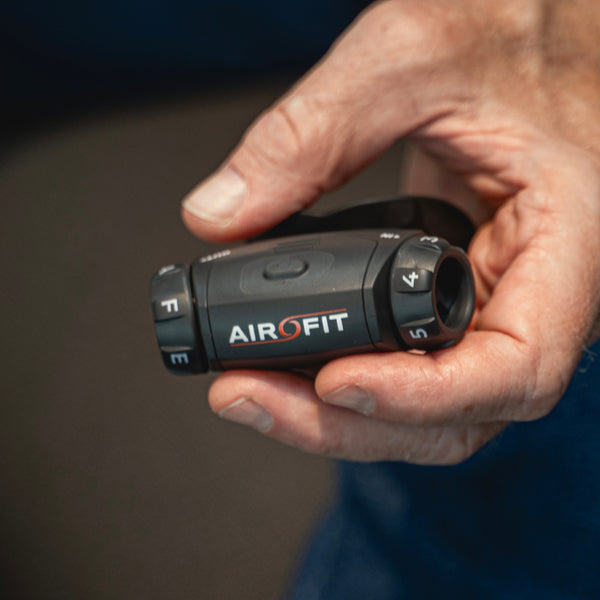
If you've been comparing breathing trainers, Airofit and POWERbreathe are probably the two names you keep seeing. Both are legitimate, science-backed devices that strengthen your respiratory muscles. But they take very different approaches — and the right choice depends on what you're training for.
This guide compares both devices across technology, training experience, price in AUD, and Australian availability — so you can make the right call without wading through marketing fluff.
Why breathing muscle training actually works
Both devices are inspiratory muscle trainers (IMTs). When your breathing muscles fatigue during hard effort, your body diverts blood away from your working muscles to keep respiration going. That's why your legs give out even when you feel like you have more in you.
Training those respiratory muscles delays fatigue and keeps blood flowing where it needs to be. The research is extensive and consistent across running, cycling, swimming, and general fitness.
At a glance
Smart, app-connected breathing trainer
- Bluetooth app with real-time feedback
- Tracks lung volume, inspiratory pressure & breath speed
- Personalised training programs (sport, sleep, wellness)
- 5–10 min sessions per day
- 180,000+ users globally, trusted by Olympians
- Available from Airofit Australia — local AUD pricing

Manual mechanical breathing trainer
- Spring-loaded mechanical resistance (Plus range)
- 11 manual resistance levels, no app required
- 30 breaths, twice daily protocol
- 200+ independent research studies
- TGA-registered Medic Plus model available
- Available via Amazon AU and select AU health retailers
Full comparison
| Feature | Airofit | POWERbreathe |
|---|---|---|
| Technology | Smart — Bluetooth app | Mechanical (K-series adds digital) |
| Real-time app tracking | ✓ Full Bluetooth app | — K-series only |
| Personalised training programs | ✓ Sport, sleep, wellness & more | — Manual protocol only |
| Measures lung volume | ✓ Yes — via app | — K-series only |
| Time per day | 5–10 minutes | ~5 min (30 breaths ×2) |
| Time to results | 3–4 weeks (reported) | 4–6 weeks |
| Research studies | 20+ Airofit-specific | 200+ general IMT studies |
| TGA-registered (AU) | — Not a medical device | ✓ Medic Plus model |
| Australian availability | ✓ Local AU reseller (Airofit Australia) | Partial Amazon AU / select retailers |
| AUD pricing | ✓ Native AUD | Partial Varies by retailer |
| Local warranty & support | ✓ AU-based support | — UK-based support |
| Best for | Athletes, wellness, data-driven training | Clinical rehab, medical use, simplicity |
How they compare — at a glance
Rated across key factors for typical Australian buyers (athletes and wellness-focused individuals).
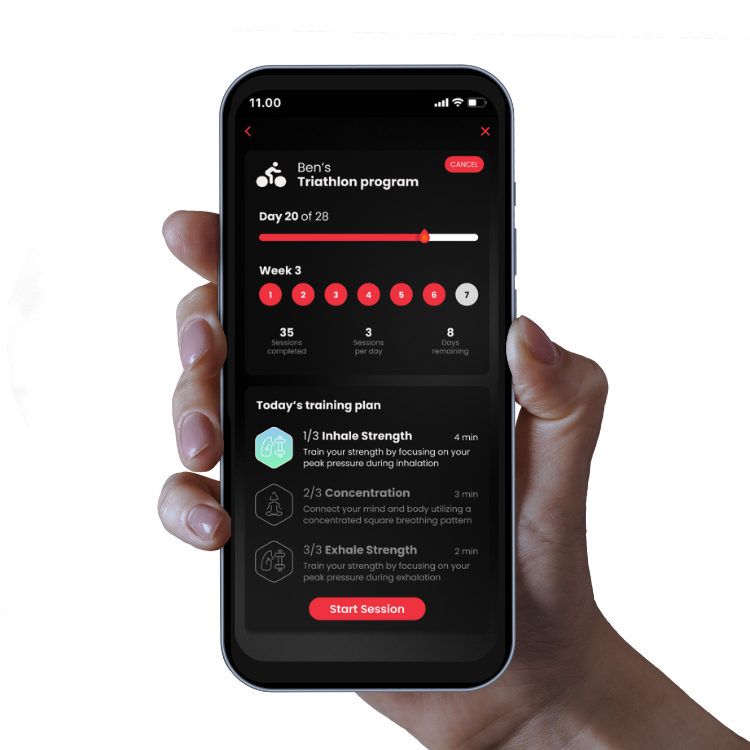
The Airofit app tracks lung volume, inspiratory pressure, and breath speed in real time — no other breathing trainer offers this level of feedback.
Which one should you buy?
✓ Choose Airofit if…
- You're an athlete (running, cycling, swimming, triathlon)
- You want guided sessions and real progress tracking
- You respond better with data, goals, and feedback
- You want Australian warranty and local support
- You're training for wellness, sleep, or stress relief
- You want a device you'll actually use long-term
Choose POWERbreathe if…
- You need a TGA-registered medical device
- A physio or healthcare provider specifically recommended it
- You prefer simple, no-tech, no-app training
- You're in a clinical or rehabilitation setting
- You're on a tight budget and the Plus (~$60) suits your needs
A note for Australian buyers
If you're purchasing in Australia, local availability matters more than it might seem. Airofit is available directly through Airofit Australia, an authorised local reseller — meaning you get AUD pricing with no currency conversion surprises, Australian warranty coverage, and faster shipping than ordering direct from Europe.
POWERbreathe's Plus range is available on Amazon Australia, but the higher-end K-series devices typically need to be imported from the UK. Support and warranty claims go back to the UK as well, which can be a friction point if something goes wrong.
For most Australians — recreational athletes, triathletes, cyclists, or anyone wanting better sleep and less stress — Airofit is the stronger everyday choice. The app-guided experience is what makes it a habit rather than a chore, and consistency is ultimately what delivers results from any breathing training program.
Ready to start breathing better?
Airofit is available now through Airofit Australia — local AUD pricing, Australian warranty, fast shipping.
Disclaimer: Airofit is not a medical device and is not intended to diagnose, treat, or manage medical conditions. If you have a respiratory condition, please consult your healthcare provider before use. Pricing is approximate and subject to change.

ShoeZap vs SteriShoe: Which UV Shoe Sanitiser Is Best?
Let’s be honest: your shoes are the perfect storm for nasty microorganisms. Dark, warm, and frequently damp from sweat, the inside of an everyday shoe is a prime breeding ground for the bacteria and fungi responsible for stubborn shoe odour, athlete’s foot, and recurrent toenail fungus.
While chemical sprays and powders might temporarily mask the smell, they rarely solve the root cause at a microscopic level. That is where ultraviolet (UV) shoe sanitisers step in. By using clinical-grade germicidal UVC light, these devices disrupt the DNA of harmful pathogens, eliminating up to 99.9% of bacteria and fungi hiding in your footwear.
If you are looking to invest in a premium device to break the cycle of reinfection, you have likely narrowed your choices down to two top contenders: the ShoeZap and the SteriShoe. In this definitive UV shoe sanitiser comparison, we break down their features, clinical effectiveness, and practical differences to help you decide which one deserves a spot in your closet.
Understanding the Technology: How UVC Light Protects Your Feet
Before diving into the specific models, it helps to understand why podiatrists highly recommend these devices. Germicidal ultraviolet light (specifically UVC at a wavelength around 253.7nm) targets the core cellular structure of fungi, viruses, and bacteria. It prevents them from reproducing, effectively killing the colony living deep inside your shoe's toe box.
Clinical Note from Podiatrists: A UV shoe sanitiser is an exceptional tool for preventing toenail fungus recurrence after clinical treatments (like laser therapy). However, remember that these devices are designed to decontaminate your shoes, not cure an active infection on your actual nails or skin. They prevent you from reinfecting yourself day after day.
ShoeZap vs SteriShoe: Side-by-Side Comparison
While both brands leverage UVC technology to keep your footwear hygienic, their physical builds, safety protocols, and added features differ significantly. Below is a quick-glance breakdown based on manufacturing specifications and independent podiatry reviews:
| Feature | ShoeZap® (P3410 / Base Model) | SteriShoe® (Premium / Essential Line) |
|---|---|---|
| Frame Material | Lightweight Plastic | Durable Steel Construction |
| Bulb Setup | Single 3W Ozone-Free UVC bulb | Dual 5W High-Powered UVC bulbs |
| Treatment Time | 15-minute quick cycle | 15 to 45-minute deep cycle options |
| Active Drying Fan | No | Yes (Built-in to dry out sweat) |
| Deodorising System | Standard UV Action | FreshScent™ integrated scent pouches |
| Safety Features | Ambient light safety check & delayed safety start | In-shoe pressure sensor safety switch |
| Included Extras | UV-proof protective safety bags | Shoe bags & custom scent inserts |
Deep Dive: What Makes the ShoeZap Stand Out?
The ShoeZap is engineered for straightforward, fuss-free utility. It is designed with a universal, one-size-fits-all shape that easily slips into everything from children's sneakers and high heels to work boots.
- Safety-First Architecture: Because direct exposure to UVC light can be harmful to human eyes and skin, ShoeZap features a smart ambient light sensor and a delayed-start function. It will not click on if it senses open ambient light.
- All-in-One Utility: Every unit comes packed with specialized UV-proof protective bags. This allows you to safely sanitize small items beyond shoes, like gloves, orthotic inserts, or gym bags.
- The Budget Verdict: If you want reliable, baseline germicidal decontamination without paying a premium for luxury extras, the ShoeZap delivers excellent value for the average family household.
Shop the ShoeZap System on MeWellness
Deep Dive: What Makes the SteriShoe Stand Out?
The SteriShoe is widely recognized as the clinical "gold standard" by board-certified podiatric surgeons, frequently backed by robust peer-reviewed decontamination data and solid FDA clearances.
- High-Octane Disinfection: Equipped with dual 5-watt UVC bulbs built into a rigid steel frame, it delivers a deeply penetrating dose of light straight into the dense material of the toe box.
- Built-In Mechanical Fan: Fungi thrive on moisture. The inclusion of an integrated drying fan mechanically drives away residual sweat and dampness while the UVC lights blast the pathogens.
- Active Scent Infusion: By integrating custom FreshScent™ slots directly into the unit, the device actively replaces musty odours with crisp freshness, going one step further than standard light treatments.
Browse the SteriShoe & Sanitiser Range on MeWellness
The Verdict: Which UV Sanitiser Should You Buy?
Choosing between these two premium systems comes down to your individual health priorities and your budget:
Choose the ShoeZap if: You want a straightforward, highly versatile, and budget-friendly household unit that accommodates all shoe sizes easily and includes robust ambient-light safety features.
Choose the SteriShoe if: You are actively battling chronic toenail fungus or severe athlete's foot and need a high-powered, podiatrist-approved device with a built-in drying fan to eliminate the moisture that fungi thrive on.
Whichever path you take, maintaining structural shoe hygiene is an absolute game-changer for long-term foot health and keeping unwanted odours completely at bay.

Why Your Shoes Smell (and the UV Tech That Actually Fixes It)
Why Your Shoes Smell (and the UV Tech That Actually Fixes It)
You know the moment. Someone asks you to take your shoes off at the door, and a small part of your soul leaves your body. Or you open your gym bag after a week of "I'll deal with it later" and immediately regret every life choice that led to this point. If you've got kids, multiply that feeling by however many pairs of school shoes are currently fermenting near the back door.
Here's the thing nobody tells you at the shoe shop: that smell isn't actually sweat. Sweat itself is almost odourless. What you're smelling is bacteria throwing a party in your shoes, and once you understand what's actually happening in there, the fix makes a lot more sense than another can of spray.
The real culprit isn't sweat — it's what's eating it
Your feet have around 250,000 sweat glands between them, more per square centimetre than almost anywhere else on your body. All of that moisture gets trapped inside a warm, dark, enclosed shoe, which is, biologically speaking, close to ideal breeding conditions for bacteria. The main offender is a bacterium that breaks down the compounds in sweat and dead skin cells, producing the sharp, sour smell you associate with old runners. Interestingly, a close relative of this bacteria is also used in the production of certain washed-rind cheeses — so if your sneakers smell vaguely like a cheese board, you're not imagining it.
Add Australian heat and humidity into the mix and you've basically built a bacterial greenhouse. Tradies in steel-caps, runners training through summer, and kids in synthetic school shoes all create the same perfect storm: warmth, moisture, and zero airflow for eight-plus hours at a time.
Why sprays and powders don't actually fix it
Deodorising sprays and powders work on the smell, not the source. They mask the odour or absorb some moisture, but the bacteria and fungus living in the foam, lining, and stitching of your shoe are still very much there, multiplying again by the next time you put your shoes on. It's a bit like spraying air freshener over a bin that still needs emptying — better for a few hours, not actually solved.
This is also why the smell tends to come back faster and faster over time, and why the same pair of shoes can start contributing to recurring issues like athlete's foot or toenail fungus, since the fungus causing those problems is often living in the shoe just as much as on the foot.
Enter UV-C: the tech hospitals use, now sized for sneakers
Ultraviolet-C (UV-C) light works completely differently to sprays. Instead of covering up odour, it damages the DNA of bacteria and fungus directly, which is why hospitals have used the same wavelength of light for years to disinfect equipment and surfaces. Bring that into a shoe-sized device, and you've got a way to deal with the actual cause of the smell rather than the symptom — no chemicals, no residue, no overpowering "tropical breeze" scent fighting a losing battle.
1. Smelly
Bacteria and fungus building up inside the shoe
2. UV zap
A 15-minute UVC cycle targets the cause
3. Fresh
Chemical-free, odour-free, ready to wear
We carry two UV-C options depending on what you need:
The SteriShoe Germ & Odour Eliminator is the more complete home solution. It kills up to 99.9% of the bacteria and fungus inside your shoes using UVC sanitising technology, and pairs it with a built-in drying fan that clears out the moisture those microbes thrive on in the first place. It's ozone-free and chemical-free, runs a 15-minute automatic cycle, and works on everything from sneakers and work boots to school shoes — which makes it a solid one-device-fits-the-whole-household option.
If you want something more portable, the PediFix ShoeZap UV Shoe Sanitizer takes the same UVC approach in a one-size-fits-all design that comes as a pair, so you can sanitise both shoes (or two different pairs) in a single 15-minute cycle. It's an easy one to keep in a gym bag or take travelling, and it kills 99% of the bacteria, fungus, and odour-causing microbes that build up with regular use.
Making it part of the routine
Realistically, this isn't a once-off fix — it's more like brushing your teeth for your shoes. A 15-minute cycle after a gym session, a hot work day in boots, or before school shoes go back on in the morning is enough to keep the bacterial population in check before it has a chance to build into a real odour problem (or worse, a skin issue). For households with multiple pairs in heavy rotation, alternating SteriShoe for the main offenders and a ShoeZap for quick top-ups covers most situations without much extra thinking involved.
Worth noting: these devices support general foot and shoe hygiene rather than treating or curing infections — if you're dealing with a persistent skin or nail issue, it's worth getting that looked at by a podiatrist or GP alongside cleaning up the environment your shoes are creating.

How to Get an NDIS Quote and Claim Wellness Devices: Step-by-Step
How to Get a Quote and Claim Wellness Devices Through NDIS: Step-by-Step
If you've already worked out that a recovery or wellness device fits your NDIS goals — and if you haven't, our guide on what NDIS can and can't cover is a good place to start — the next question is almost always the same: how do you actually turn that into an approved purchase?
The good news is that the NDIS doesn't work from a fixed list of pre-approved products. Funding decisions come down to whether a support helps with your daily function, safety, independence or participation, and whether it's reasonable and necessary for your disability-related needs. That flexibility is helpful, but it also means there's no single button to press — the process depends on how much the item costs and how your plan is managed. Here's how it breaks down.
First, work out which cost tier you're dealing with
Assistive technology under the NDIS sits in three broad tiers, and which one your device falls into changes everything else about the process:
- Low-cost AT (under $1,500): Usually funded from your Core – Consumables budget. If you have funds available, you generally don't need a quote approved in advance.
- Mid-cost AT ($1,500–$15,000): Sits under Capital – Assistive Technology. You'll typically need written evidence — most often a report from an OT, physio or other relevant allied health professional — and it's good practice to have a formal quote ready even if it isn't always mandatory.
- High-cost AT (over $15,000): Requires a full assessment, a quote (often two, if more than one supplier can provide a comparable item), and direct NDIA approval before you purchase anything.
Most of the recovery and wellness equipment people ask us about — compression systems, breathing trainers, vibration therapy devices — sits in the low-to-mid range, so the process below focuses mainly on those.
1. Get a Quote
Request written pricing from your chosen supplier
2. Get It Approved
Submit evidence to your plan manager or the NDIA
3. Make Your Claim
Purchase, then process payment against your budget
Step 1: Check your plan budget
Log into the myPlace portal or My NDIS app to see what's been allocated and where. If that's not your thing, your Local Area Coordinator, support coordinator, or plan manager can check it for you. You're looking for two things: how much funding is available, and which budget category it sits in (Core – Consumables for low-cost items, Capital – Assistive Technology for anything mid-cost or above).
Step 2: Get the right evidence
For anything above the low-cost threshold, the NDIA wants to see that the device is actually linked to your disability-related needs — not just that it would be nice to have. This usually means a short report from an OT, physiotherapist, or other relevant allied health professional explaining what the device addresses and why it's the appropriate solution. This step is worth doing properly; a vague or generic letter is one of the most common reasons funding requests stall.
Step 3: Request a formal quote
Once you know what you're after, get a written quote from your chosen supplier. You can request one directly from our team via our NDIS page — just let us know the item and that it's for an NDIS claim, and we'll put together something you can hand straight to your plan manager or upload to your portal. If your plan is NDIA-managed, double-check with your plan manager or LAC whether the item needs to come from a registered provider, since this varies depending on how your plan is set up.
Step 4: Submit your quote and evidence
Where this goes next depends on how your plan is managed:
- Self-managed: You purchase the item yourself, then submit the invoice for reimbursement through the portal or app.
- Plan-managed: Send the quote and any supporting evidence to your plan manager, who handles the claim on your behalf.
- NDIA-managed: Documents typically go through the My NDIS portal, or your support coordinator can submit them via the NDIS service hub.
Step 5: Wait for approval
Low-cost items funded from your consumables budget generally don't need a separate approval step — if the funds are there, you're good to go. Mid-cost items usually move faster once the evidence is solid, often within a couple of weeks through a plan manager. High-cost items take longer, sometimes several weeks, since they require direct NDIA sign-off.
Step 6: Purchase and claim
Once you've got the green light (or straight away for low-cost consumables purchases), finalise the order and keep the invoice. If you're plan-managed, your plan manager processes the claim against the correct budget line. If you're self-managed, you'll submit the receipt yourself for reimbursement.
Step 7: Keep your paperwork
Hold onto the invoice, the allied health report, and any approval correspondence. NDIS plans get reviewed periodically, and having a clean paper trail makes that process far less stressful if your equipment ever comes up for discussion.
A few honest caveats
Funding outcomes always come down to your individual plan and goals — what gets approved for one participant won't automatically apply to another, even for the same device. Processing times and specific requirements can also change as the NDIS updates its guidelines. If you're ever unsure, your Local Area Coordinator, support coordinator, or plan manager is the best source for advice specific to your situation — this guide is meant to help you walk in prepared, not replace that conversation.